
Help us make digital spaces safe for children and young people.
TikTok, Instagram and X exposed Latin America’s children to violent and sexualised content within minutes, new study finds
Children across Latin America may be at far greater risk online than platforms publicly admit, according to new research published today by 5Rights Foundation, Revealing Reality, and the National Institute of Public Health of Mexico, with the support of El hilo de Ariadne.
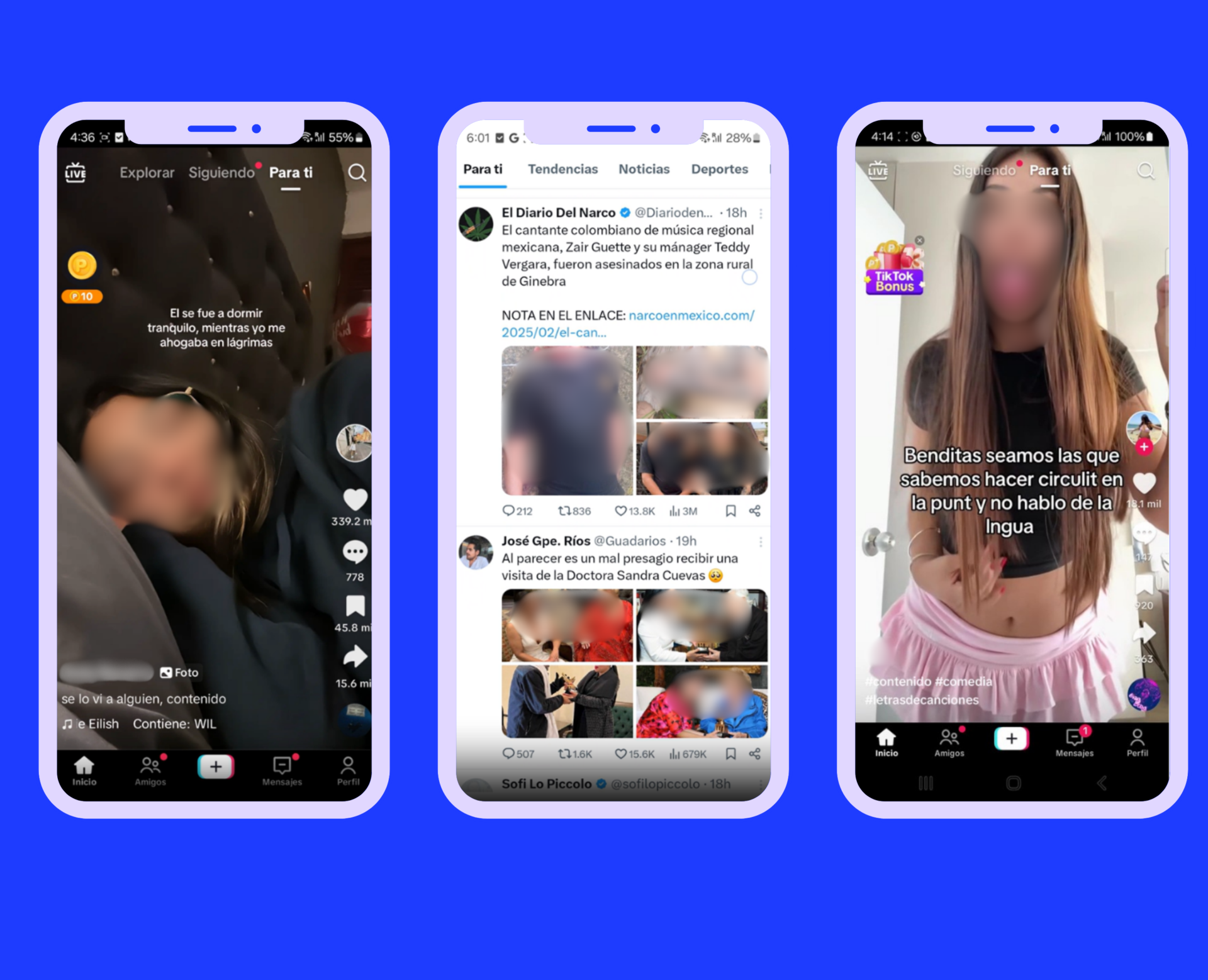
The study, which used child avatars designed to mirror the online behaviours of real children, found TikTok, Instagram and X rapidly directed accounts toward violent, sexualised and emotionally harmful content within minutes of ordinary use.
The avatars were active for just 60 minutes over a 12-day period — an average of five minutes per day. Yet within that small window, platform design steered simulated accounts toward depression and suicide-related content, graphic executions and sexually explicit material that objectified women and girls and normalised violence against them.
Damon De Ionno, Managing Director Revealing Reality, highlighted:
“This research showed a clear gap between platforms’ public safety commitments and what children encounter in practice. It demonstrates how quickly a feed can become increasingly concentrated with violent, sexualized and emotionally extreme content, in response to everyday online activity.”
Key findings
Algorithms intensified harmful content within minutes
After one avatar liked a small number of posts referencing sadness, TikTok’s recommendation system transformed the account’s feed. Within 40 minutes, the avatar was shown a video normalising suicide without any warnings or support resources. On X, another avatar encountered uncensored footage of an executed celebrity within 15 minutes of scrolling and interaction.
“This research shows that despite the public claims of tech companies, they have failed to meaningfully change their systems.”
– Marie-Ève Nadeau, Head of International Affairs at 5Rights
Search functions amplified exposure to violence and sexualised content
In apparent contradiction of its own Community Guidelines, TikTok surfaced increasingly sexualised videos and simulated sex acts after avatars searched common and neutral terms such as “bikini” and “belleza”.
On X, searches for terms such as “Sinaloa” and “enfrentamientos” quickly flooded feeds with graphic interrogations, decapitations and videos showing boys as young as 15 allegedly being recruited into cartel violence.
Leonor Rivera, from the National Institute of Public Health of Mexico, emphasised that this goes beyond content moderation:
“The design of these platforms normalises violence and can directly affect the mental health of children and adolescents.”
Platform design rewarded prolonged engagement
Researchers found gamified features encouraged extended viewing even alongside emotionally distressing content. One TikTok avatar was shown coin-based reward features while simultaneously being recommended videos focused on anxiety, sadness and loss.
Age checks remained ineffective
Despite all platforms requiring users to be at least 13 years old, every avatar accessed services simply by entering a false date of birth, with no meaningful verification required. This included TikTok and Instagram, both of which publicly claim to use technology to identify underage users and apply additional protections.
Sharon Bissell, from El hilo de Ariadne, Mexico, noted,
“The results deeply concern us, and we hope they will drive social and legal changes that allow children to be children.”
Civil society organisations across Latin America warn that these findings reflect a broader regional problem and should be a wake-up call for policymakers across the region.
As governments across the region increasingly consider online child safety legislation and age-appropriate design standards, the findings provide a stark reminder that responsibility for children’s safety cannot rest solely with families. The systems shaping children’s online experiences must themselves be designed to protect their rights and safety.