
Help us make digital spaces safe for children and young people.
Leaders recommit to protecting children’s rights at first UN AI Summit
Following 5Rights-led joint campaign, States and UN agencies have announced a coalition to protect children’s rights in the AI race at the first Global Dialogue on AI.
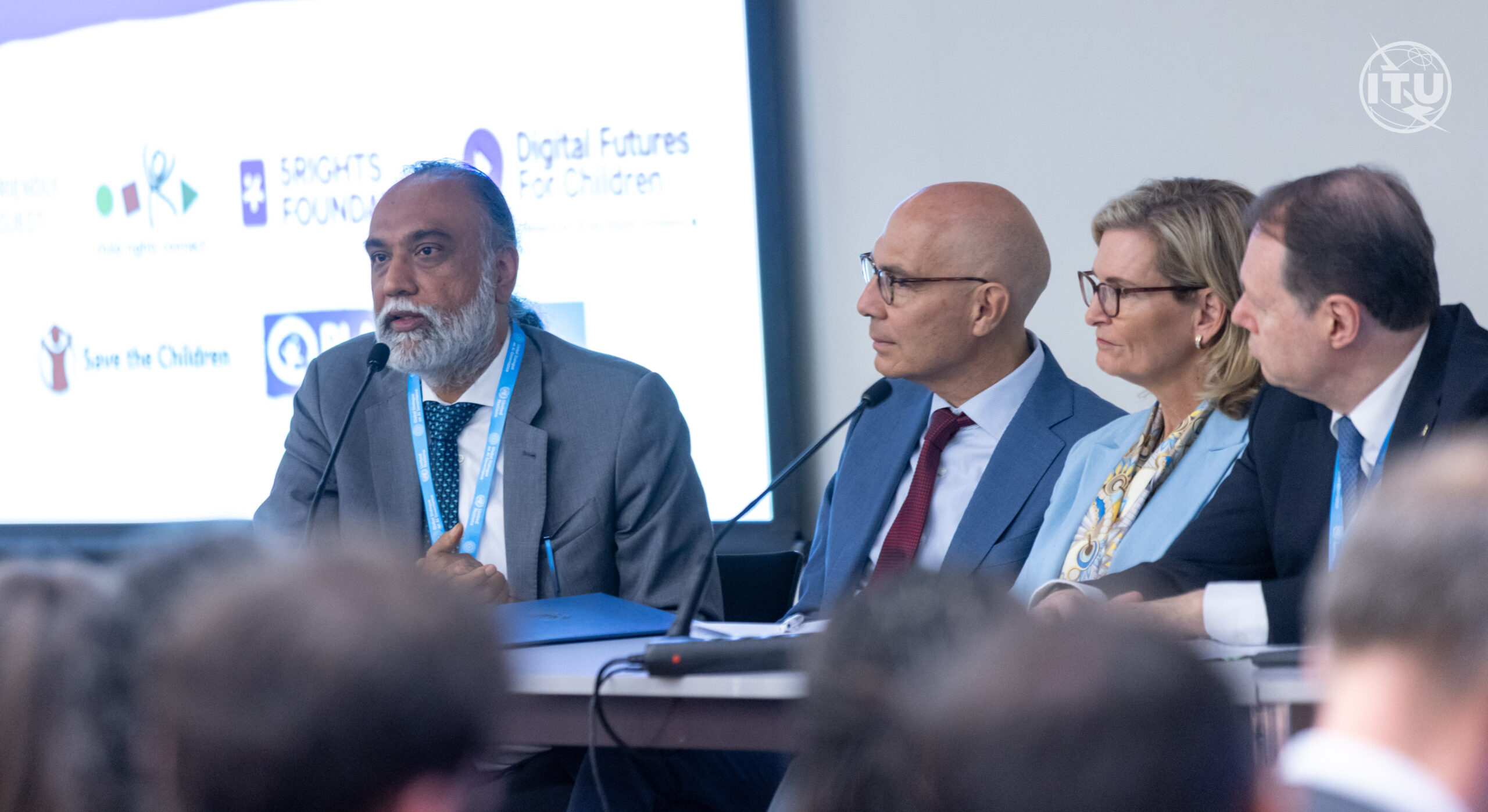
At the inaugural Global Dialogue on AI, States and UN agencies recommitted to implementing concrete action for children’s rights in the context of AI and launched the Coalition for Children’s Rights and Protection in the Age of AI.
Welcoming these new commitments, 5Rights Head of International Affairs Marie-Ève Nadeau said:
“The AI race cannot become a race to the bottom for children’s rights and safety. By ensuring AI only reaches children when it is demonstrated to be safe and rights-respecting, we ensure they can seize the opportunities of AI.”
This push towards implementing Governments’ existing obligations and commitments is a direct outcome of 5Rights’ advocacy urging them to protect children from untested and unregulated AI systems.
Ahead of the Global Dialogue on AI, 5Rights led a campaign with more than 120 leading organisations and experts across all continents urging Governments to prohibit manipulative practices and require proof that AI systems likely to affect children are both rights-respecting and safe before their launch to market.
Building on UNCRC General comment No. 25 and the UN Joint Statement on Artificial Intelligence and the Rights of the Child, these recommendations reflect a growing consensus that untested and unsafe AI systems should not affect children.
According to a new survey coordinated by 5Rights, the Child & Youth Friendly Governance Project and the UN Human Rights Office among others, most children say AI should never be designed in a manipulative way.
Announcing a new AI Child Safety Pledge, UN Secretary-General António Guterres also echoed the Joint Statement’s call for independent safety testing and oversight before AI systems reach children:
“No child should be a guinea pig for unregulated AI. We do not let medicine reach a child until it is proven safe. We test every toy; yet AI has reached our children – their learning, their friendships, their most private questions, before anyone asked what it would do to them.”
Finally, the UN Independent International Scientific Panel on AI – which includes 5Rights-LSE Digital Futures for Children centre Director Prof. Sonia Livingstone – stresses in its first report the importance of implementing existing human rights frameworks mandating safety by design and of conducting child rights impact assessments to mitigate risks before children are harmed.
Five years after UNCRC General comment No. 25 clarified how States’ obligation to protect children’s rights applies in the digital world, Governments have repeatedly recommitted to implementing their well-established duty to protect children’s rights by holding tech companies accountable. Now, concrete action is needed to ensure that children are not collateral damage in the race to develop and deploy AI.