
Help us make digital spaces safe for children and young people.
Children should have a say in shaping the digital world
From unsafe digital products to narrow regulations, excluding children from decision-making has consequences. 5Rights Youth Council members explain what meaningful participation actually requires.
Children used to grow up in schools, playgrounds, libraries and sports centres. Now, they spend a considerable amount of time in spaces that weren’t designed with them in mind: they connect with friends on social media apps that barrage them with notifications, they play games designed to push them to spend more money, they confide in AI chatbots engineered to collect their data.
According to recent 5Rights research, children are served a paid advert on TikTok as often as every five videos and they are exposed to violent or sexualised content withing minutes of activity. These aren’t glitches in the system, but the predictable result of platforms designed around engagement and revenue by people who never sat across from the children living with the consequences.
And even when tech companies claim to take children’s safety into account, those efforts fall short without meaningful input from children themselves. According to a recent study published by the Heat Initiative and the Cybersafety Research Center, out of 86 safety features disclosed by some of the most popular online platforms and digital services, almost two thirds were ineffective, inaccessible to children or simply missing.
Currently, tech companies prioritise business margins over their best interests, while the policies meant to protect children end up patching symptoms rather than addressing the cause. If children’s experiences, rights and perspectives were meaningful considered in design, testing and governance processes, the outcomes would be significantly better.
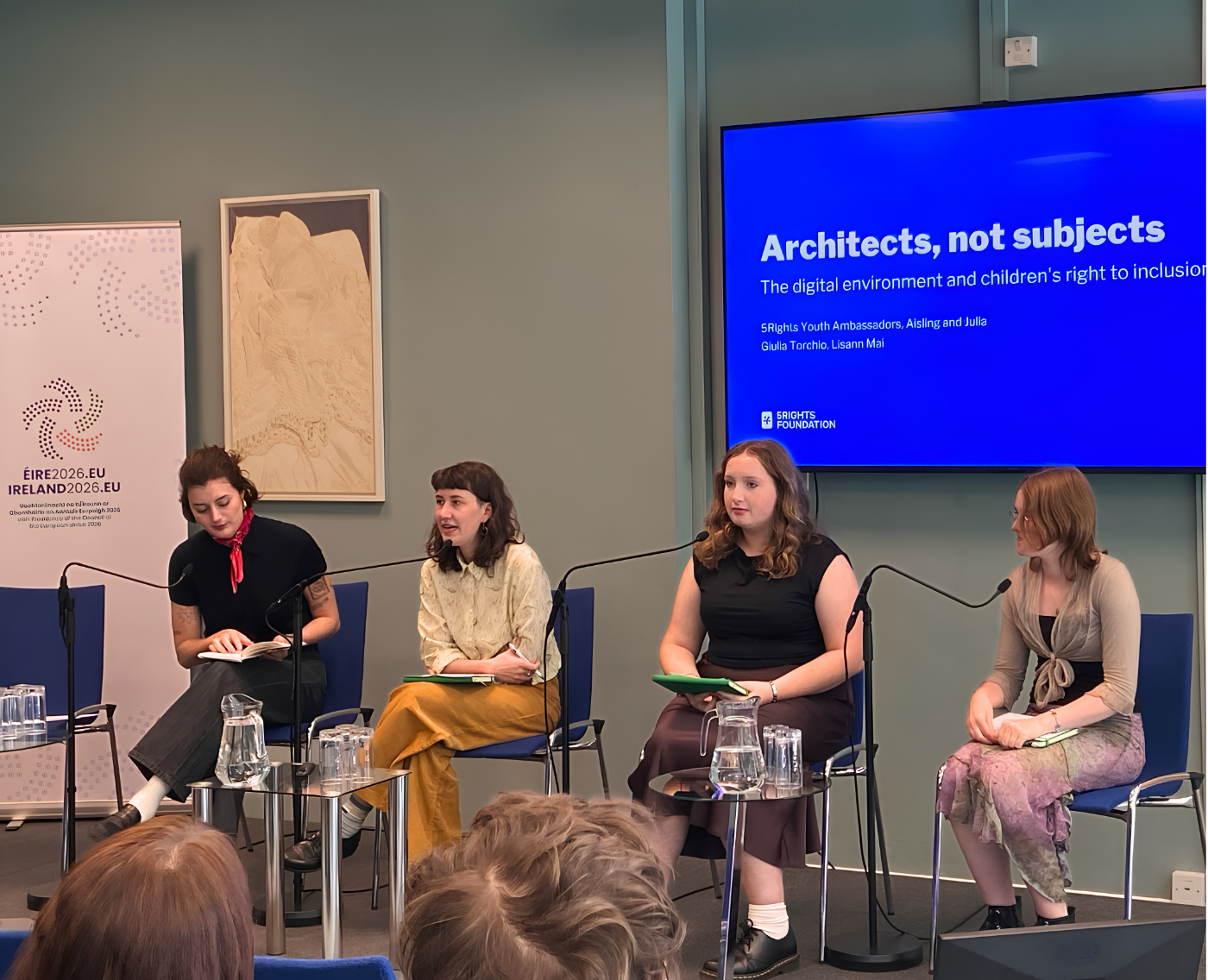
At the “Listening to Children and Young people – Challenges in Challenging Settings” high-level conference organised by the Irish Presidency to the EU, 5Rights Youth Council Members Aisling and Julia, spoke about the challenges of navigating spaces whose language, processes and experiences weren’t designed for them to engage in a safe and meaningful way.
Julia highlighted why children’s experiences must inform digital policy, pointing to the gap between the protections they need and the digital environment they experience:
“Thousands of children, actual human beings, struggle with their digital environment because they don’t know their rights or have a say in what goes into policies. [… And] my parents can’t give me development and safety together, because the digital space is unsafe for children, while the government has yet to enforce policies that force safety by design in the digital environment for children.”
Aisling and Julia called for children’s voices to be meaningfully included in tech design and policy discussions, pointing to the Lundy Model – a participation framework that also shaped the conference’s own agenda. This model sets out how to create a safe space where children can share their views with the people who need to hear them and have real influence over decisions that affect them.
“Embed youth directly into governance and decision-making. If everything we say goes nowhere the moment we leave this room, then youth participation is just a box-ticking exercise.”
Aisling, 18, Ireland
While children’s participation in decision-making is becoming more and more frequent as seen with the EU Platform for Child Participation and Irish Youth Council, actionable progress on children and young people’s demands for meaningful participation is still moving slowly. 5Rights will continue working to ensure that children’s participation translates into meaningful influence, so that their experiences and perspectives inform the policies, regulation and design decisions that shape their digital lives.