
Resources
Explore our curated resources and find valuable publications, tools and positions on children’s rights in the digital environment.


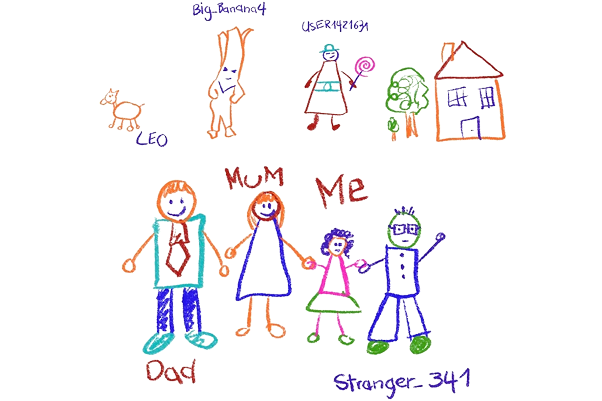
Return of the Chat Roulette? Walkie Talkie – All Talk case study
This case study examines the safety of Walkie Talkie – All Talk, a chat roulette-style social platform marketed at teenagers. 5Rights looked at what children could experience in an ordinary use of the service, by analysing the app’s policies and conducting structured testing with child and adult test accounts.
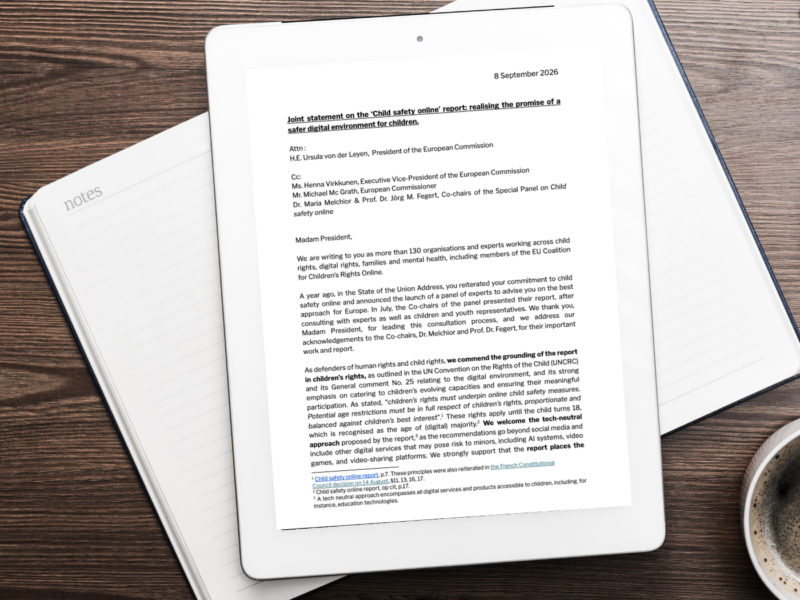
Joint statement on the ‘Child safety online’ report: realising the promise of a safer digital environment for children
Alongside over 130 organisations and experts across child rights, digital rights and mental health, 5Rights is calling on European Commission President Ursula von der Leyen to turn the recommendations of the Special Panel on Child Safety Online into EU law.
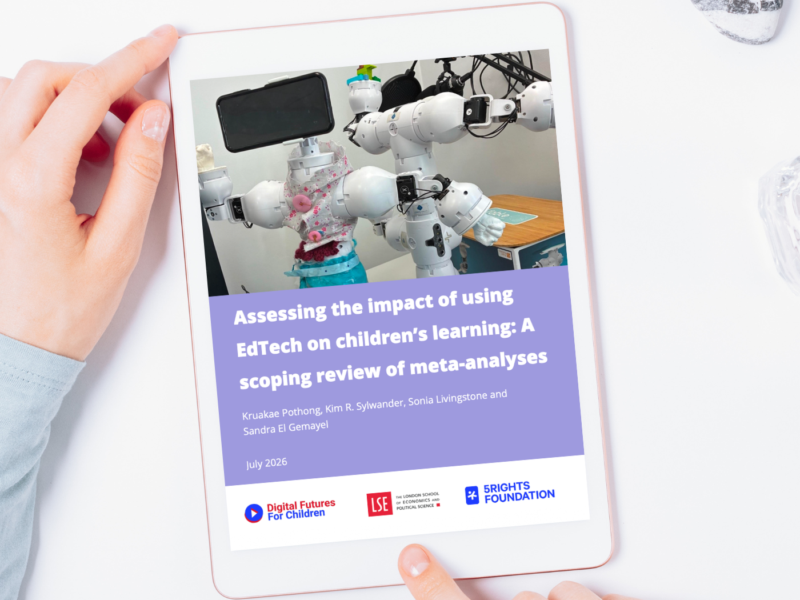
Assessing the impact of using EdTech on children’s learning: A scoping review of meta-analyses
Despite considerable investment in EdTech in schools, what it actually delivers for children’s learning remains unclear. This scoping review warns of a lack of evidence about the wider impact of EdTech on children.
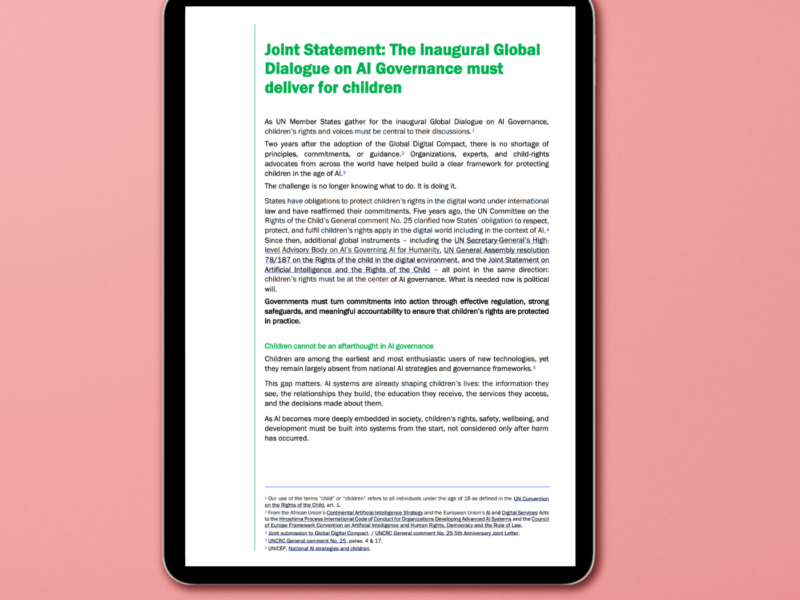
Joint Statement: The inaugural Global Dialogue on AI Governance must deliver for children
Over 120 leading organizations and experts across all continents are calling on Governments to turn obligations commitments into action through effective regulation, strong safeguards, and meaningful accountability to ensure that children’s rights are protected in practice.
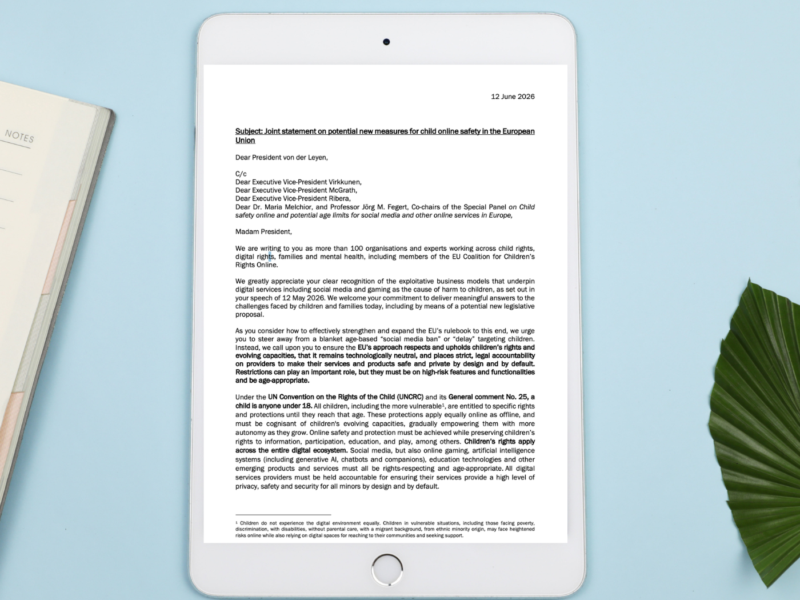
Joint statement on potential new measures for child online safety in the European Union
A joint statement from more than 100 organisations and experts urging the European Commission to pursue safety-by-design regulation over blanket age-based social media bans – and to keep accountability where it belongs: with technology providers.
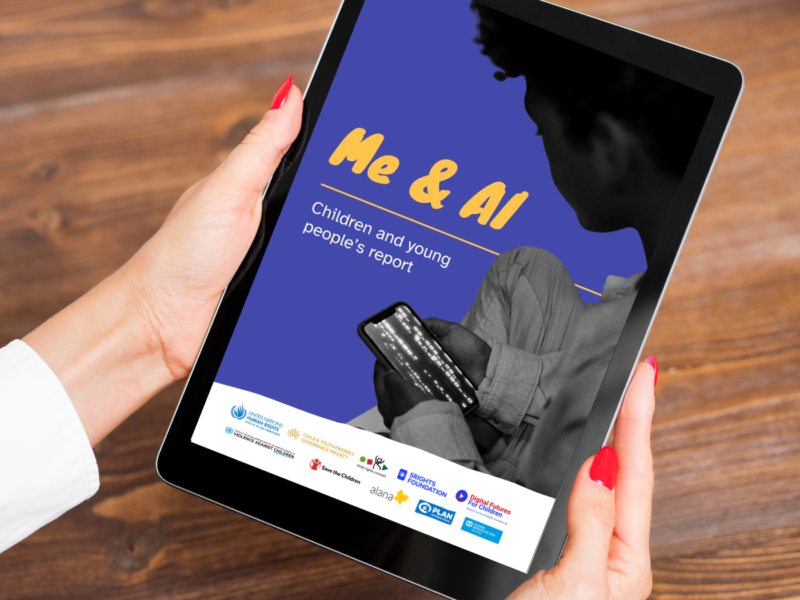
Me & AI: Children and Young People’s Report
Me & AI brings together the voices of more than 1,100 children from 49 countries who shared their experiences, concerns, and recommendations through a global consultation organised to inform the United Nations Global Dialogue on AI Governance.

Infinite scroll: growing up on TikTok
This report from 5Rights and Revealing Reality presents a detailed portrait of a child’s life on one of the most popular social media platforms among children in the UK today – TikTok.
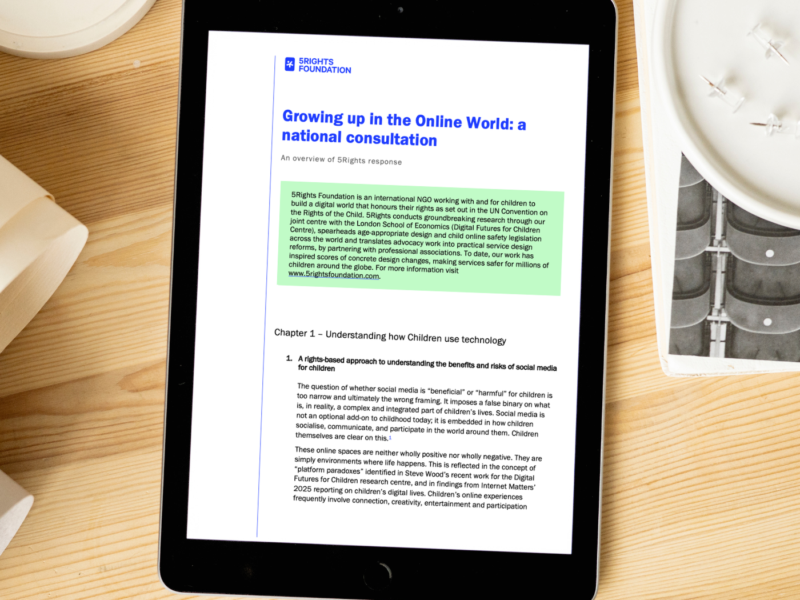
Growing up in the Online World: a national consultation
5Rights’ response to the national consultation Growing Up in the Online World, outlining key recommendations for protecting children’s rights in the digital environment.
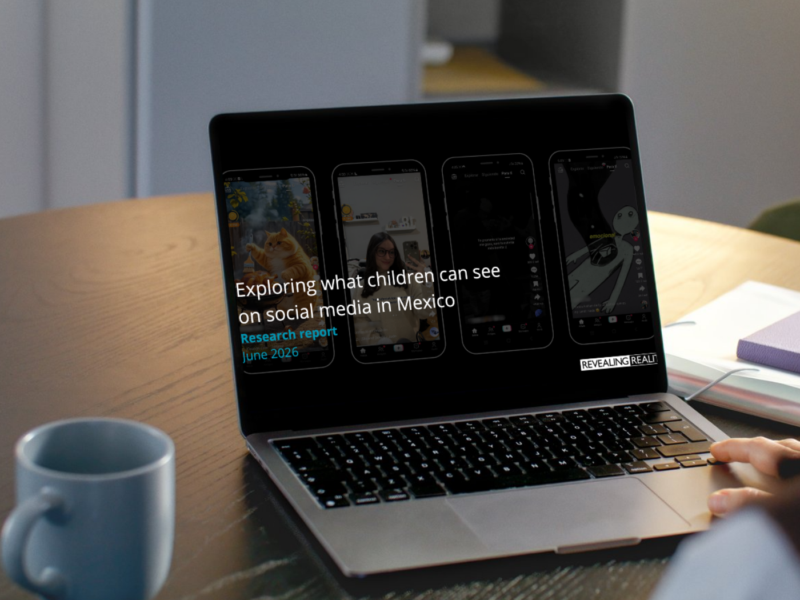
Exploring what children can see on social media in Mexico
Social media platforms, including TikTok, Instagram, and X, state that they are committed to keeping children safe online. This research sets out to explore how these commitments translate into real experiences for children in Mexico.