
Help us make digital spaces safe for children and young people.
New EU KIDS Act can “put paid to the tech exploitation of children” but must apply equally to all platforms
The European Commission has unveiled its proposed EU KIDS Act, a landmark new framework aimed at making digital services safer for children and reducing their exposure to harmful and addictive design.
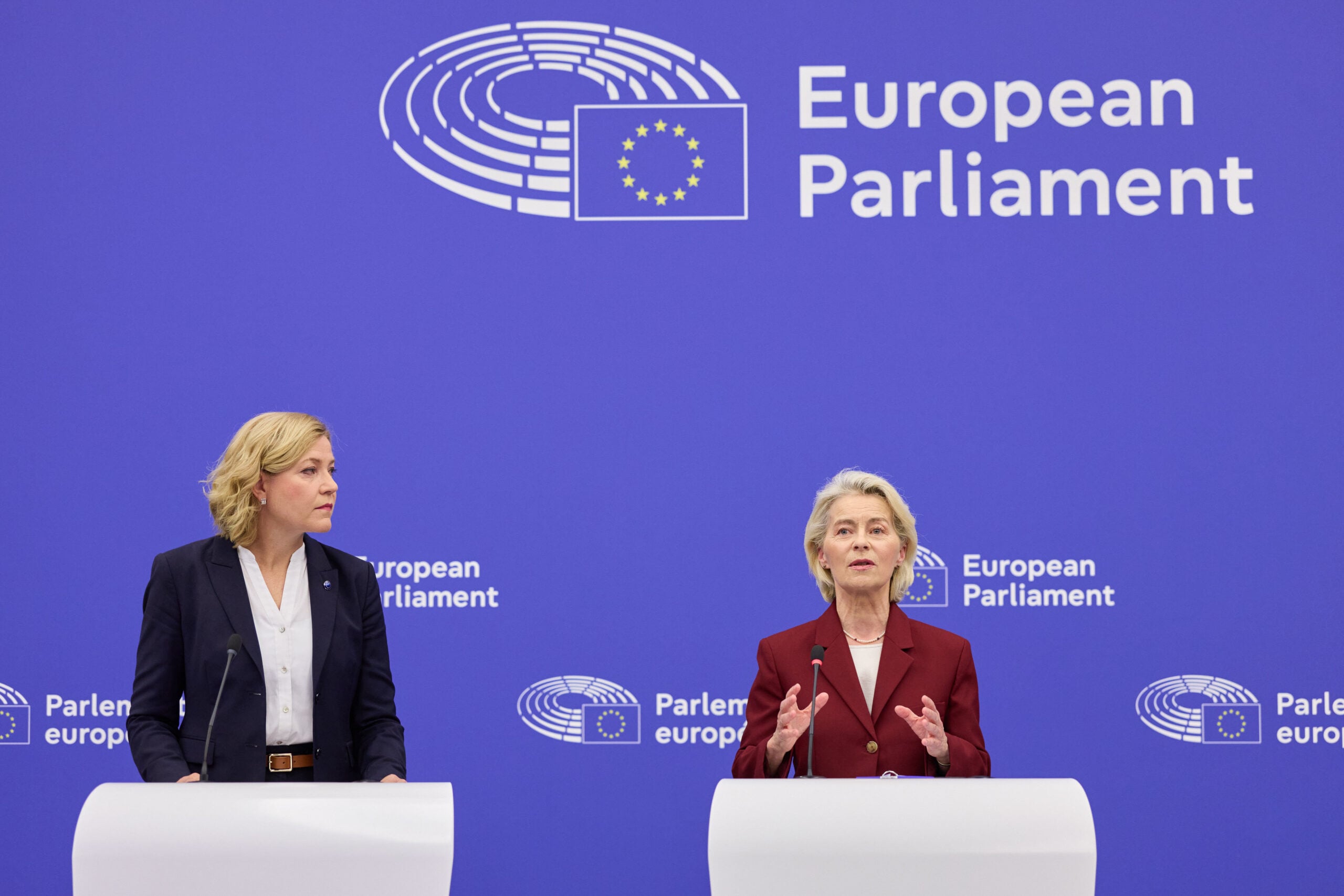
© European Union, 2026, licensed under CC BY 4.0. Photographer: Dati Bendo.
The European Commission has today unveiled its proposed EU KIDS Act, a landmark new framework aimed at making digital services safer for children and reducing their exposure to harmful and addictive design.
The proposals represent a significant step towards principles that 5Rights Foundation has long campaigned for: that digital services should be safe by design and by default, and that technology companies – rather than children and parents – should bear responsibility for demonstrating that their products are safe for children.
Crucially, the proposals go beyond age restrictions. The EU KIDS Act would require services within its scope – including social media, video-sharing platforms, online games, AI companions and chatbots – to be designed with children’s safety in mind.
Key measures include:
- No addictive design features: including infinite scroll, artificial notifications, anthropomorphic AI and certain reward features.
- Greater agency over recommender systems: including limitations on profiling and account recommendations, options to choose and tune recommendations and measures to prevent “rabbit hole” effects.
- Safer default settings: with private settings and risky features disabled by default.
- Protection from unwanted contact: including turning off notifications, preventing unknown users from initiating direct contact and making blocking easier.
- Mandatory parental support tools: to enable access to games and AI chatbots and companions for under 13s only with guardian consent and oversight.
- Easier reporting and access to support when children encounter harmful content.
The new age restrictions that would be introduced by the EU KIDS Act include:
- Under 13s: no access to social media and video sharing platforms. Access to games and AI chatbots and companions requires parental consent and oversight through default tools.
- 13–15-year-olds: access to social media and video-sharing platforms through restricted “mini accounts” set up and controlled by parents or guardians with limited features, peer-only contacts and a one-hour daily screen-time limit. All services including gaming and AI services would have to meet the Act’s safety-by-design requirements.
- 15–18-year-olds: young people could establish their own accounts but would only have access to services that meet the Act’s safety-by-design requirements.
The legislation aims to shift responsibility more firmly onto technology companies. Larger platforms would have to submit detailed compliance plans, which would be assessed by independent auditors, demonstrating how they will meet the new requirements. The Commission is also proposing an expedited enforcement process, with final decisions possible within 90 days.
The Commission says the proposals are a response to the scale of children’s exposure to the online world. Its research this year found that teenagers spend an average of 4.5 hours online on school days and 6.1 hours on weekend days, while 92% of Europeans consider strengthening the protection of children and young people online a priority. They say that a common EU framework is needed to avoid fragmented rules and different levels of protection across Europe.
Campaigners have welcomed these provisions but are calling for a safety certification process that extends beyond the largest companies to set a floor for all tech for kids. The proposals appear to place firmer safety by design requirements on social media and video streaming platforms than on other digital spaces used by children. These include ex-ante controls – preventative measures in place by default to reduce risk and exposure to harm. Campaigners warn that these requirements should apply equally to all products and services used by children, including so called “educational tech”.
Advocates for children’s online safety further caution that the measures rely heavily on parental monitoring tools and that the feasibility, technical standards and privacy safeguards surrounding these mechanisms remain unclear.
Leanda Barrington-Leach, Executive Director of 5Rights Foundation said,
“We warmly welcome this proposal as a solid basis for an EU law that can put paid to tech exploitation of children. Reversing the burden of proof and requiring services to demonstrate they are safe before market release would finally bring tech in line with what EU consumers rely on and expect with all other products – especially when children’s welfare is at stake.
“We will work closely with EU Member States and MEPs to ensure the Act delivers on this promise, ensuring that children are safe and their rights are respected wherever they are online – which must equally apply to AI services, gaming and so-called “education tech” – through legal obligations, not self-regulation.”