

Help us make digital spaces safe for children and young people.
Inter-American Commission scrutinises tech companies’ harmful design and lack of accountability
Following evidence from 5Rights and partners on how tech companies’ business models and design decisions harm children, the Inter-American Commission on Human Rights is considering a regional model law.
Throughout Latin America, children are growing up in a digital world built to exploit their vulnerabilities. In Mexico, 5Rights research found that social media promoted self-harm content, cartel violence, and sexualised imagery to simulated child accounts within minutes. This is not an accident, but the predictable outcome of business models and design decisions shaped to maximise engagement.
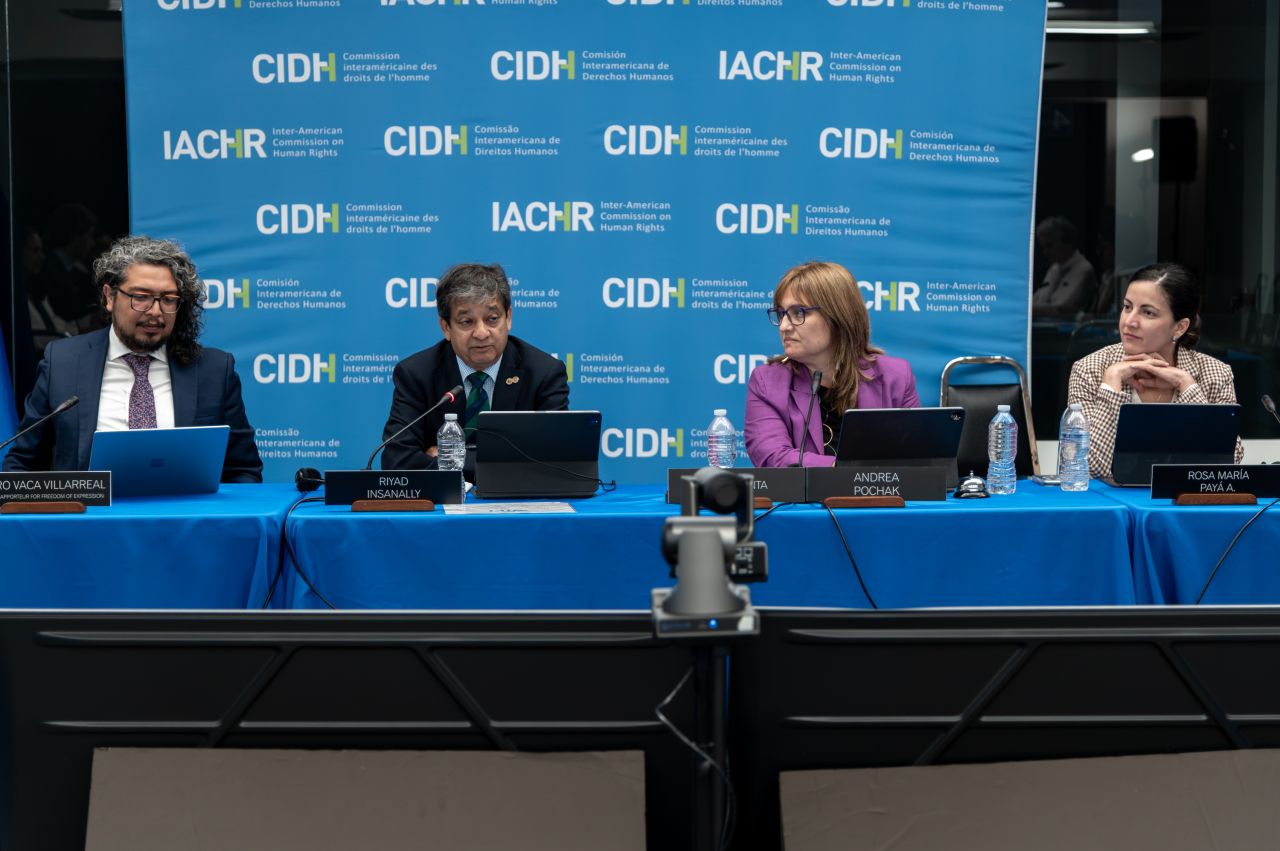
This evidence has now been put before the Inter-American Commission on Human Rights (IACHR) during a hearing regarding the impact of technology on human rights. 5Rights partners, Instituto Alana and Red PaPaz, set out how corporate lack of responsibility entrenches harm to children, leaving harmful features and functionalities unchanged and shifting the burden of protecting children onto families and schools. which requires tech companies to assess and mitigate the risks they expose children to address tech companies’ exploitative business choices.
This comes at a time when policymakers are increasingly pushing back on tech companies’ persistent prioritisation of profit over children’s best interests.
Yet, children do not enjoy the same protections. When tech companies are not held accountable, they fail to deliver age-appropriate digital products and services. For example, 5Rights research found that TikTok was paying children in Mexico for prolonged viewing– a feature that has been withdrawn in the EU since 2024.
5Rights Head of International Affairs Marie-Ève Nadeau said:
“Children throughout Latin America largely use the same services designed by the same companies and face similar risks. Yet, the protections they enjoy are deeply unequal. States can rectify this imbalance by requiring safety and privacy by design and default for all children across the region.”
To close the gap the evidence exposed, the IACHR called for regional cooperation and standards to hold tech companies accountable to guarantee human rights, especially those of children and adolescents.
Five years after the adoption of UNCRC General comment No. 25, the region must move to hold tech companies accountable through a coordinated approach anchored in children’s rights. The IACHR now has an opportunity to encourage the Organization of American States to ensure digital products and services are proven safe before reaching children and put an end to double standards so that every child in Latin America can enjoy a rights-respecting digital world.